
WELCOME BONUS 300%
UP TO €2000 + 100
FREE SPINS
UP TO €2000 + 100
FREE SPINS
Home → Blackjack
Blackjack at Red Dice: Variants, Rules and Payouts
Why Loss Progression Quickly Reaches Table Limit
The Blackjack Party table at Evolution imposes a maximum bet of 1,000 EUR, which constrains high rollers attempting aggressive progression strategies during winning streaks. This cap forces players to scale back wagers significantly when the bankroll grows, limiting the potential for exponential gains that usually accompany martingale systems. Consequently, the theoretical profit from a long winning run is artificially capped by the house limit rather than player skill or luck. The 7.47% house edge on insurance bets further erodes capital if players attempt to hedge losses against dealer blackjacks with side wagers.
Infinite Blackjack allows stakes up to 5,000 EUR per hand, providing substantial room for high-limit players to deploy larger betting units without immediate restriction. However, the 99.47% RTP indicates a 0.53% house advantage that compounds over thousands of hands, meaning progressive loss systems eventually hit this mathematical wall. Players relying on doubling down after splits must account for the DAS rule improving RTP by only 0.14 percentage points against the baseline. The unlimited seating does not mitigate the variance, so large bets still face standard deviation risks inherent in high-stakes blackjack environments.
Lightning Blackjack caps bets at 2,500 EUR while offering multipliers up to 25x, yet the 99.56% RTP suggests a slightly lower house edge of 0.44%. High rollers might exploit these multipliers, but the underlying base game rules remain subject to the same structural disadvantages as standard tables. A loss progression strategy here faces the dual threat of multiplier volatility and the fixed table maximum restricting total exposure. The combination of high limits and variable payouts creates a complex risk profile where bankroll management becomes more critical than simple progression logic.
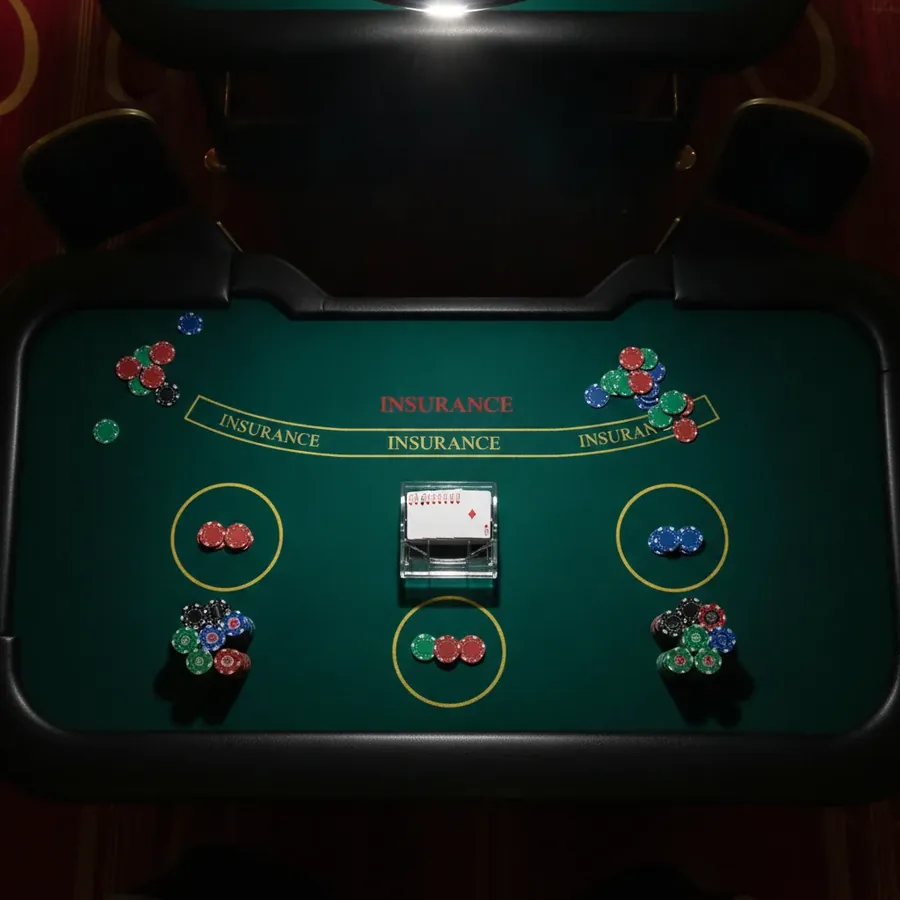
Infinite Blackjack uses the Six Card Charlie
The Infinite Blackjack variant by Evolution features an RTP of 99.47%, reflecting favorable rules such as Dealer Standing on Soft 17 and Double After Split allowances. These specific conditions reduce the house edge to 0.53%, making it one of the more generous online blackjack offerings for strategic players seeking optimal returns. The six-card automatic win rule, often called Charlie, significantly boosts player odds by rewarding extended play without busting against the dealer's hand. This rule effectively lowers the overall risk profile compared to games lacking such generous payout structures for natural hands.
Standard Blackjack Ein Deck offers a superior RTP of 99.85% with a mere 0.15% house edge due to single-deck advantages and 3:2 payouts. In contrast, the Infinite table’s four side bets like Any Pair or 21+3 carry much higher house edges that dilute the overall expected return. While the six-card rule helps, it cannot fully compensate for the multiple-deck shoe structure that inherently increases the casino's statistical advantage. Players focusing solely on the main game benefit most, whereas engaging side bets reduces the effective value derived from the favorable base rules.
The Liberal Vegas Strip variant achieves an even lower house edge of 0.28% through Late Surrender and Resplit Aces, outperforming many infinite tables. The Infinite game lacks surrender options, forcing players to hold marginal hands that would otherwise be folded to minimize loss in tighter rule sets. This absence of surrender means high rollers must rely strictly on basic strategy adherence to maintain the advertised 99.47% return over time. The difference in house edge between 0.28% and 0.53% represents a significant long-term cost difference for high-volume players.
Blackjack 6 Decks with S17 and DAS provides a 99.54% RTP, sitting closer to the Infinite variant’s performance than single-deck games. The key differentiator remains the infinite seating and dynamic nature of the table, which affects pacing rather than pure mathematical expectation. High rollers utilizing the six-card rule find it useful primarily in soft hands where hitting risks busting, thereby preserving bankroll stability. The 0.02% improvement from using six decks instead of eight is negligible compared to the impact of surrender availability.
What Peek Means with a Dealer Ace
When the dealer shows an Ace, they perform an internal peek for a ten-value card to determine if they have a natural blackjack before players act. This procedure protects the player from losing their initial bet plus insurance simultaneously if the dealer indeed holds a blackjack, ensuring fair resolution of the hand. If the dealer does not have blackjack, players can then decide whether to place the insurance bet, which pays 2:1 if the dealer completes a twenty-one. This sequence prevents unnecessary financial exposure for players who might otherwise wager on insurance against a non-blackjack dealer hand.
The Insurance bet carries a steep house edge of 7.47% in six-to-eight deck games, making it statistically unfavorable for all but card counters tracking true counts above +3. For a standard player, accepting insurance when the dealer has an Ace results in a negative expected value that drains the bankroll over time. The 92.53% RTP on this specific side bet highlights its poor profitability compared to the main game’s near-99% returns. Declining insurance is always the mathematically correct decision unless the player possesses precise knowledge of the remaining deck composition.
Blackjack Ein Deck exhibits a slightly lower insurance house edge of approximately 5.88% due to the reduced number of cards affecting probability calculations. Even in this single-deck scenario, the edge remains prohibitive for casual players, reinforcing the universal advice to reject insurance without counting skills. The difference between 5.88% and 7.47% illustrates how deck penetration influences side bet viability, though both values remain highly disadvantageous. High rollers should avoid this trap entirely, focusing instead on optimizing base game decisions where the house edge is under 1%.
The Liberal Vegas Strip ruleset includes Late Surrender, which offers an alternative to insurance by allowing players to forfeit half their bet when facing a strong dealer upcard. This option improves the overall RTP by 0.08 percentage points, providing a more valuable exit strategy than the costly insurance mechanism. Surrender applies after the dealer checks for blackjack, ensuring players do not lose money unnecessarily in predictable losing scenarios. Utilizing surrender strategically preserves capital better than chasing insurance payouts that statistically guarantee long-term losses.
Blackjack doesn't count for every bonus offer
The Red Dice welcome bonus offers a 300% match up to €2,000 alongside 100 free spins, requiring significant turnover to unlock withdrawn funds. Table games like blackjack contribute only 10% toward meeting the wagering requirements, drastically slowing progress compared to slots which count at 100%. A high roller depositing €2,000 receives a €6,000 bonus, necessitating €240,000 in total turnover if the requirement is x40, but only €24,000 in actual slot bets. Playing blackjack exclusively would require €240,000 in wagers to clear the same bonus, imposing a massive volume constraint on bankroll management.
Slots provide the most efficient path to clearing bonus funds because every euro wagered counts fully toward the obligation, unlike the 10% contribution from blackjack tables. This discrepancy forces players to balance entertainment preferences with financial efficiency, as high-stakes blackjack generates minimal bonus credit relative to the turnover needed. For instance, betting €1,000 on Infinite Blackjack adds only €100 to the cleared amount, whereas the same stake on slots fulfills the entire requirement. High rollers must therefore diversify gameplay to meet terms within reasonable timeframes without exhausting their primary bankroll.
The 10% contribution rate for table games reflects the lower house edge inherent in blackjack, which makes it less profitable for casinos to allow rapid bonus clearance. Consequently, players attempting to use high-limit tables to clear bonuses face extended play sessions that expose them to greater variance and potential loss. The 300% bonus structure incentivizes slot play heavily, as the mathematical advantage shifts significantly toward the operator when relying on low-contribution games. Strategic players allocate bonus funds to slots while using real money for blackjack to maximize enjoyment and minimize restrictive turnover demands.
Bonus terms typically exclude certain high-RTP games from full contribution, ensuring the casino retains sufficient margin to cover the matched funds provided. The distinction between 100% slot contribution and 10% table game contribution creates a two-tiered system favoring high-variance slot mechanics over strategic table play. High rollers should calculate the effective cost of clearing bonuses by dividing the required turnover by the contribution percentage to assess true value. Ignoring these percentages leads to inefficient bankroll usage and prolonged exposure to the house edge across both game categories.
When can you increase your bet?
Players may double their bet immediately upon receiving their first two cards in Infinite Blackjack, provided the total equals nine, ten, or eleven according to standard rules. This action, known as doubling down, allows the player to receive exactly one additional card and potentially double their initial stake for that specific hand. The DAS rule permits doubling after splitting pairs, enhancing flexibility for high rollers managing multiple hands from a single original wager. This strategic tool maximizes profit potential on favorable starting totals while limiting exposure to unfavorable situations.
Splitting pairs allows players to divide matching cards into two separate hands, each requiring an additional bet equal to the original stake. Resplitting Aces is generally restricted to one split per ace, and subsequent hits on split aces are limited to one card each in most variants. Doubling after split (DAS) applies to other pairs, enabling further betting increases if the new hands start with strong totals like ten or eleven. These mechanics facilitate aggressive betting patterns when the deck composition favors the player, though they require disciplined bankroll allocation.
The Lightning Blackjack variant introduces multiplier opportunities up to 25x on winning hands, encouraging higher bets when lightnings strike specific cards. Players can adjust their wagers between rounds based on previous outcomes, though the table limit of 2,500 EUR caps the maximum exposure per spin. Increasing bets after a loss follows traditional progression logic, but the variable multiplier payouts disrupt steady bankroll growth models. High rollers must balance the allure of multipliers with the rigid constraints imposed by the table’s upper betting boundary.
Blackjack Party by Evolution maintains a party atmosphere with two moderators while capping bets at 1,000 EUR, influencing how aggressively players can escalate stakes. The fixed limit restricts the effectiveness of martingale-style progressions that rely on exponential bet increases to recover losses quickly. Players can increase bets after wins or splits within this ceiling, but the structural cap prevents unlimited recovery attempts. This environment suits players preferring controlled risk over high-variance progression strategies that exceed practical table boundaries.
Blackjack variants at a glance
| Variant | Payout | House edge | Rule | Bet range |
|---|---|---|---|---|
| Blackjack Split / Double / H17 – Regel-Effekte | n.a. (Regel-Modifikatoren) | H17 +0.22 Prozentpunkte; RSA −0.08 Prozentpunkte; DAS −0.14 Prozentpunkte | Dealer Hits Soft 17 verschlechtert RTP um 0.22 Prozentpunkte; Resplit Aces verbessert um 0.08 Prozentpunkte; Double After Split verbessert um ca. 0.14 Prozentpunkte; 6 Decks statt 8 – ca. 0.02 Prozentpunkte. | Double – Einsatz ×2 mit einer Karte; Split – bis 4 Hände; Ass-Split meist mit einer Karte. |
| Blackjack Ein Deck, klassische Regeln, 3:2 | 99.85% | 0.15% | Weniger Decks = niedrigerer Vorteil; ein Deck gibt ca. −0.48 Prozentpunkte gegenüber 8 Decks. Oft durch 6:5 Auszahlung kompensiert. | Blackjack 3:2, Gewinn 1:1 |
| Blackjack Liberal Vegas Strip (liberale Regeln, 3:2) | 99.72% | 0.28% | Günstigste Regelkombination: S17 + DAS + Resplit + Late Surrender. Standardabweichung 1,15 | Blackjack 3:2, Gewinn 1:1 |
| Blackjack Insurance / Versicherung (6–8 Decks) | 92.53% | 7.47% | Separate Nebenwette bis 50% der Hauptwette, wenn der Dealer ein Ass hat. Basisstrategie schreibt IMMER Ablehnung vor (außer Karten zählen bei True Count ≥ +3). Bei einem Deck Vorteil ≈ 5.88% | Insurance 2:1 |
| Blackjack Auszahlung 6:5 statt 3:2 (6 Decks) | 98.15% | 1.85% | Ersatz von 3:2 durch 6:5 fügt exakt +1.39 Prozentpunkte zum Vorteil des Casinos hinzu – stärker als jede andere Regeländerung. Bei $10 Einsatz zahlt Blackjack $12 statt $15. | Blackjack 6:5, Gewinn 1:1 |
| Blackjack 6 Decks, S17, DAS, DOA, Auszahlung 3:2, Basisstrategie | 99.54% | 0.46% | Dealer steht auf Soft 17; Verdopplung auf jeder Zweierkarte; Verdopplung nach Split erlaubt; keine Aufgabe. Basisstrategie ist für diesen Wert zwingend | Blackjack 3:2, normaler Gewinn 1:1, Insurance 2:1 |
Which hands are excluded from Surrender?
Late Surrender allows a player to forfeit half the stake after the dealer checks for blackjack, reducing the house edge by 0.08 percent points compared to standard rules. This specific rule modification improves the Return to Player percentage by approximately 0.08 percent points, offering a marginal but measurable advantage to high rollers who play strategically. The payout is exactly 50 percent of the original bet, ensuring immediate capital preservation in unfavorable situations without waiting for the hand resolution.
Surrender is strictly unavailable when the dealer holds a natural blackjack, as the round ends immediately before the player can exercise this option. Early Surrender, which permits forfeiture before the dealer check, offers a much larger benefit of up to 0.6 percent points but is extremely rare in online environments. Consequently, players must rely on the later variant, which provides only a fraction of the potential savings available in land-based casinos with more flexible rules.
The mathematical impact of surrender depends heavily on the deck composition and specific table limits, with single-deck games offering an advantage of approximately 5.88 percent for insurance bets instead. High stakes players often avoid tables that omit this rule entirely, as it increases the overall volatility and reduces the expected value of borderline hands like sixteen against a ten. The absence of surrender forces continuous play, significantly increasing the total amount wagered over time.
What doesn't count towards turnover at 10 percent?
Table games contribute only 10 percent toward the wagering requirements for the 300 percent welcome bonus up to 2,000 euros plus 100 free spins offered by the platform. This low contribution rate means that every euro wagered on blackjack or other card games counts as merely ten cents toward clearing the bonus funds, drastically extending the playthrough period. Slots, in contrast, contribute 100 percent, making them the most efficient path for meeting the turnover obligations associated with the promotional credit.
Blackjack Liberal Vegas Strip, featuring a 99.72 percent RTP and a 0.28 percent house edge, falls squarely into the table game category subject to the reduced contribution ratio. Players betting at maximum limits on infinite blackjack tables, which allow stakes up to 5,000 euros, will find their bankroll depleting rapidly relative to bonus clearance progress. The disparity between slot efficiency and table gaming efficiency requires careful budget management to avoid violating terms through excessive play.
Infinite Blackjack by Evolution, with its 99.47 percent RTP and unlimited seating, exemplifies the high-limit environment where the 10 percent contribution rule becomes particularly punishing. A one thousand euro wager on this game generates only one hundred credits toward the turnover requirement, whereas the same amount on slots would generate one thousand credits. This structural difference incentivizes players to balance their gameplay strategies between high-variance slots and low-contribution table games to optimize bonus utilization.
Lightning Blackjack, offering multipliers up to twenty-five times on winning hands, also contributes at the reduced 10 percent rate despite its higher variance profile. The side bets such as Any Pair or Hot Three do not alter the primary game classification, keeping the entire table under the restrictive contribution limit. Understanding these distinctions prevents accidental breaches of the bonus terms by assuming all games offer equal weight toward the required turnover volume.
No Double Down on three cards
Standard blackjack rules typically permit doubling down on any two initial cards, but specific variants restrict this action to prevent players from maximizing bets on favorable three-card totals. This restriction eliminates a powerful strategic tool that high rollers rely upon to increase their edge during advantageous situations, thereby slightly worsening the overall return to player percentage. The limitation applies uniformly across most digital implementations, forcing players to adhere to stricter basic strategy charts that forbid additional wagers after the first hit.
Resplit Aces improves the RTP by 0.08 percent points, while allowing Double After Split enhances it by approximately 0.14 percent points, yet neither compensates for the loss of three-card doubling. High stakes players accustomed to aggressive tactics must adjust their approach, accepting lower potential returns on split pairs that draw strong third cards. The cumulative effect of these restrictions shifts the balance further in favor of the house, requiring precise execution of base strategies to mitigate losses.
Insurance bets, paying 2:1 but carrying a house edge of 7.47 percent, remain available regardless of doubling restrictions, though they are generally discouraged unless counting cards. The inability to double on three cards reduces the frequency of large payouts during favorable deck compositions, impacting the overall volatility and expected value of each session. Players must rely solely on splitting and hitting to improve weak hands, limiting their ability to capitalize on temporary statistical advantages during gameplay.
Blackjack Party runs with two hosts
Blackjack Party by Evolution features a unique format hosted by two presenters who manage the flow of the game and engage with the audience throughout the broadcast. The betting range spans from 1.00 euro to 1,000 euros per hand, accommodating both casual players and high rollers seeking substantial stakes in a lively atmosphere. This dual-host structure creates a distinct dynamic compared to standard live dealer tables, influencing the pace and social interaction aspects of the gaming experience.
The party theme introduces elements of entertainment beyond pure mathematics, with music and commentary designed to maintain energy levels during extended playing sessions. Despite the festive environment, the underlying rules remain consistent with traditional blackjack, including the 3:2 payout for natural blackjacks and standard dealer standing rules on soft seventeen. High stakes participants must navigate this vibrant setting while maintaining focus on optimal decision-making to ensure their long-term profitability remains unaffected by distractions.
Maximum bets of 1,000 euros align with mid-tier high roller expectations, falling short of the five-thousand-euro limits found on Infinite Blackjack tables. The presence of two hosts does not alter the mathematical probabilities or the house edge, which remains determined by the specific rule set applied to each shoe. Players should evaluate whether the enhanced social features justify potentially slower game speeds or higher minimums that might arise from the interactive nature of the show.
Evolution's proprietary technology ensures seamless video streaming and real-time betting integration, allowing players to place wagers instantly despite the complex visual interface. The dual-moderator setup requires careful coordination to handle multiple player inputs and side bets simultaneously without causing delays in card distribution. This operational complexity supports the high-volume traffic typical of popular live casino rooms, ensuring stability even during peak usage periods for major tournaments or special events.
Four hours of play with 300 EUR bankroll
A bankroll of 300 euros allows for approximately four hours of sustained play at moderate stakes, depending on the volatility of the chosen blackjack variant. Assuming an average bet size and a house edge of 0.28 percent for Liberal Vegas Strip, the expected loss per hour is minimal, preserving capital for longer sessions. This duration enables high rollers to test various strategies and observe trends without facing immediate ruin, provided they adhere to strict bankroll management principles.
Infinite Blackjack, with its 99.47 percent RTP and 0.53 percent house edge, offers slightly better retention rates than standard tables, extending the viability of the 300 euro stack. Betting one hundred euros per hand results in rapid depletion within minutes, whereas smaller bets of ten euros spread the risk over hundreds of decisions. Calculating the hourly burn rate helps players determine the optimal stake size to achieve their desired four-hour playing window without exceeding their financial limits.
Lightning Blackjack introduces higher variance due to multipliers up to twenty-five times, which can accelerate bankroll fluctuations significantly compared to standard games. While big wins occur occasionally, the increased volatility means the 300 euro bankroll may last less than four hours if aggressive betting patterns are employed. Players must balance the allure of large payouts with the mathematical reality that higher variance increases the probability of busting out before completing the intended session duration.
Soft 17: Dealer Hits or Stands
The dealer hitting soft 17 is a critical rule modifier that significantly impacts the house edge in blackjack games. This specific action increases the casino's advantage by exactly 0.22 percentage points compared to standing rules. Consequently, high rollers must seek tables with soft 17 stands to minimize long-term losses on every hand played.
The difference between hitting and standing on soft seventeen alters the theoretical return to player rate substantially. A standard eight-deck game typically suffers this penalty unless the software explicitly offers a stand variant. Players should verify the rule set before seating, as even minor deviations drastically change the expected value over thousands of hands.
Evolution provides Infinite Blackjack with dealer standing on soft 17, which benefits serious players seeking better odds. This table also allows doubling after split, improving the RTP by an additional 0.14 percentage points for strategic users. The combination of these liberal rules creates a more favorable environment for those wagering larger amounts per round.
Highroller from 500 EUR per hand
Infinite Blackjack at Evolution supports betting limits ranging from one euro up to five thousand euros per hand. This upper limit accommodates high rollers who require substantial stakes to justify their time and risk exposure during sessions. The unlimited seating feature ensures that large bets are always accepted without queue delays or table capacity restrictions.
Lightning Blackjack offers a slightly lower maximum stake of two thousand five hundred euros per winning hand. Despite the reduced cap, the inclusion of lightning multipliers up to twenty-five times can significantly boost payouts on lucky rounds. High rollers might prefer Infinite Blackjack for its higher ceiling, allowing for consistent large-scale wagers without artificial constraints.
Blackjack Party features a maximum bet of one thousand euros, which is suitable for mid-tier high rollers only. The party atmosphere with two moderators may distract from the strategic focus required for optimal play at high stakes. Serious players often bypass this variant in favor of Infinite Blackjack due to its superior maximum limit and simpler gameplay structure.
Splitting Eights vs Standing on 16
Basic strategy universally mandates splitting eights instead of standing on a hard sixteen against most dealer upcards. This mathematical decision reduces the expected loss compared to the alternative of hitting or standing with a weak total. High rollers relying on strict basic strategy will find this rule application consistent across all standard blackjack variants offered online.
Resplitting aces is a rare but valuable rule that improves the player's return by approximately 0.08 percentage points. While splitting eights is standard, resplitting Aces allows players to capitalize on potential blackjacks with multiple starting hands. This rule is often paired with late surrender, further enhancing the overall profitability for disciplined players at the tables.
Late surrender allows players to forfeit half their bet after the dealer checks for blackjack, reducing losses by 0.08 percentage points. This rule is particularly effective when holding a hard sixteen against a dealer ten or nine, mirroring the logic of splitting eights. Combining surrender with proper splitting strategies creates a robust framework for managing bankroll volatility during high-stakes sessions.
Which rule variants does the software show?
The Liberal Vegas Strip variant represents one of the most favorable rule sets available for strategic blackjack players. It combines soft 17 stands, double after split, resplitting, and late surrender to achieve a house edge of just 0.28 percent. High rollers seeking optimal conditions should prioritize this specific configuration to maximize their theoretical return over extended playing periods.
Infinite Blackjack utilizes six decks with standard deviation metrics and includes four distinct side bets like Any Pair and 21+3. These side bets offer separate payout structures but generally carry a much higher house edge than the main game. Players focusing on base strategy should ignore these options to maintain the highest possible return rate on their primary wagers.
Lightning Blackjack incorporates random multipliers up to twenty-five times on winning hands, adding significant variance to the standard game. The base game maintains a house edge of 0.44 percent, similar to other six-deck variants with liberal rules. High rollers must account for this increased volatility when calculating bankroll requirements, as multiplier hits can drastically alter short-term results.
Step-by-step Split at the Live Table
Players initiate a split by placing two equal bets on a pair, such as two eights, to create two independent hands. Each new hand receives one card initially, requiring separate decisions for hitting, standing, or doubling down according to basic strategy. This process allows high rollers to potentially double their action while maintaining control over each individual hand's outcome and risk profile.
After splitting, players can often double their bet on any two-card total, including those resulting from the split itself. Doubling after split is permitted in many liberal variants, providing additional opportunities to capitalize on favorable dealer upcards. This flexibility enhances the strategic depth of the game, allowing skilled players to adjust their wagers dynamically based on emerging hand strengths.
Some tables allow resplitting pairs beyond the initial split, though aces are frequently restricted to receiving only one additional card. Resplitting eights can occur up to four times in certain games, significantly increasing the number of active hands and total wagered amount. Understanding these specific rules is crucial for high rollers to accurately calculate their exposure and potential returns during complex splitting scenarios.
Contact
Live - online chat
Banking









Providers












Red Dice Casino 2026